
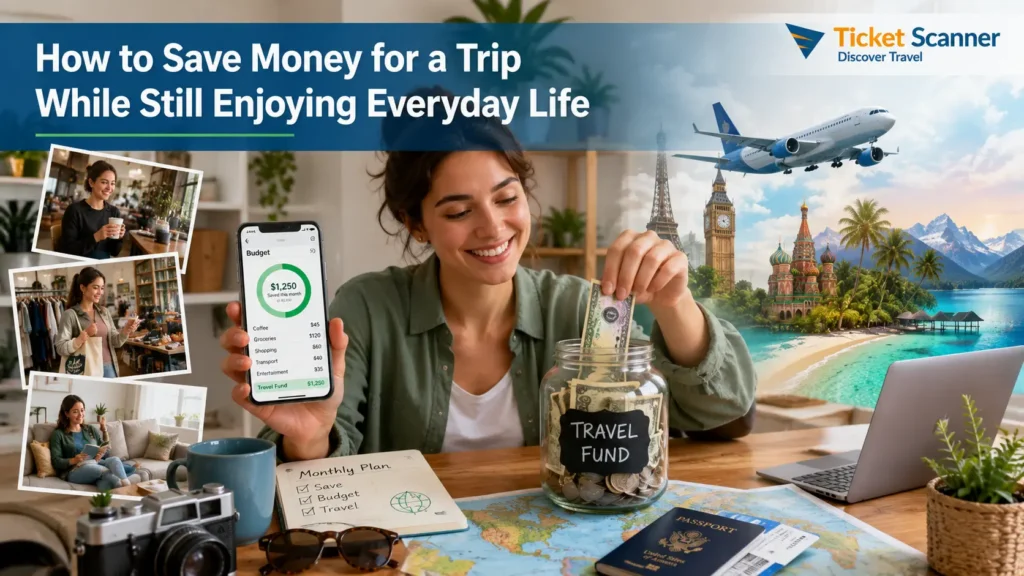
Want to travel without feeling like you’ve put your whole life on hold? Learning how to save money for a trip while still enjoying everyday moments is completely possible if you use a clear plan, small daily tweaks, and a realistic timeline. Instead of “all or nothing” budgeting, you can build a travel fund steadily and still go out, buy treats, and have fun—just more intentionally.
Below is a practical, step‑by‑step guide on how to save money for a trip without turning your daily routine into a constant sacrifice.
Step 1: Define Your Trip and Your Number
The first step in how to save money for a trip is knowing exactly what you’re saving for. Vague goals like “I want to travel somewhere” don’t motivate you as much as a clear picture.
- Choose your destination (or short list of destinations).
- Estimate major costs: flights or trains, accommodation, food, local transport, and a buffer.
- Add them up to get your target amount.
For example, if you need a certain amount for a 5‑day trip, break that into a monthly or weekly target. This turns how to save money for a trip into something measurable: “I need X per month for Y months” instead of a random wish.
Step 2: Create a Dedicated Travel Fund
A big part of how to save money for a trip is separating your travel money from your everyday spending. When everything sits in one account, it’s easy to lose track.
- Open a dedicated savings account or use a labeled digital “goal” wallet.
- Name it something motivating, like “Summer Trip Fund” or “Europe 2027”.
- Set up an auto‑transfer right after you get paid (even a small amount).
This simple habit makes how to save money for a trip automatic. You’ll feel less tempted to dip into the fund because it’s not mixed with your regular spending money.
Step 3: Track Your Current Spending Without Being Extreme
You don’t need to become ultra‑frugal to master how to save money for a trip, but you do need to know where your money actually goes.
For one month, track:
- Food (home cooking and eating out).
- Transport (fuel, cabs, public transit).
- Subscriptions (streaming, apps, memberships).
- Small extras (snacks, coffee, impulse purchases).
Once you see the pattern, you can decide which areas to trim slightly. The goal of how to save money for a trip here is not “never spend,” but “spend consciously.” Maybe you cut two café visits a week instead of four, or cancel one subscription you barely use and redirect that money to your travel fund.
Step 4: Use the “Swap, Don’t Stop” Strategy
A key mindset shift in how to save money for a trip is swapping, not stopping. You still enjoy everyday life, but you choose cheaper versions of the same experiences.
Examples:
- Instead of eating out three times a week, cook at home twice and go out once.
- Swap expensive movie tickets for a home movie night with friends.
- Choose free or low‑cost outings (parks, local events, street food) over pricey venues.
By doing this, you’re still having fun, but you free up money to put into your travel fund. This is how to save money for a trip without falling into the “no fun until I travel” trap.
Step 5: Create Small, Daily “Travel Habits” That Save
Tiny habits are powerful when you’re learning how to save money for a trip because they don’t feel painful, yet they add up.
Consider habits like:
- Making your own tea or coffee most days.
- Carrying a reusable water bottle instead of buying drinks outside.
- Planning weekly meals so you waste less food and money.
- Walking or biking for short distances when possible.
If each habit saves even a small amount per day, over weeks and months those savings become real progress. This is how to save money for a trip that feels integrated into normal life, not a temporary punishment.
Step 6: Boost Income in Small, Realistic Ways
Cutting costs is one side of how to save money for a trip; earning a little extra is the other. You don’t need a second full‑time job—just small boosts.
Ideas:
- Freelance or part‑time work in your skill area (tutoring, design, writing, coding).
- Selling unused items (books, gadgets, clothes) you no longer need.
- Helping with tasks in your community (teaching, repairs, events) for a small fee.
If you dedicate this extra income directly to your travel fund, it accelerates how to save money for a trip. You can still use your main salary for essentials and some fun while your side income powers the adventure.
Step 7: Set Milestones and Reward Yourself
If you only reward yourself when the full amount is saved, you may lose motivation. A balanced approach to how to save money for a trip includes small milestones.
For example:
- At 25% saved: treat yourself to a modest café visit or a small purchase.
- At 50%: plan your itinerary or book one affordable part of the trip.
- At 75%: buy a useful travel accessory you’ll use (like a backpack or power bank).
These mini‑rewards keep the process enjoyable and remind you why you’re learning how to save money for a trip in the first place.
Step 8: Protect Your Mental Health While Saving
It’s easy to feel guilty every time you spend money when you’re focused on how to save money for a trip. But constantly saying “no” to everyday joy can lead to burnout and make you abandon your goal.
To avoid that:
- Keep a small, fixed “fun budget” each month for outings or treats.
- Don’t compare your saving speed to others; each person’s situation is different.
- Remind yourself that travel is part of a happy life, not the only source of happiness.
A healthy approach to how to save money for a trip respects both your present and future self. You’re building an amazing experience later, while still allowing yourself moments of joy now.
Putting It All Together
In simple terms, how to save money for a trip while enjoying everyday life looks like this:
- Define your travel goal and total amount.
- Create a dedicated travel fund with automatic transfers.
- Track spending and trim consciously, not brutally.
- Swap expensive habits for cheaper but fun alternatives.
- Add tiny daily saving habits that feel natural.
- Boost income a bit and direct it straight into your travel fund.
- Celebrate milestones so you stay motivated.
- Keep a small budget for present‑day enjoyment.
When you follow this path, how to save money for a trip stops being a stressful sacrifice and becomes a steady, enjoyable journey. You’ll arrive at your destination with enough money to truly enjoy it—and with the confidence that you didn’t have to give up your everyday life to get there.